

[ Download Link ]
Mod author: Acifer
Version used for review: 1.1.
“Bards sing of a daring expedition lost in the Troll Mountains seeking dwarven ruins. Will you rewrite their ending, or join them in an eternal ballad?“
There are few things that I enjoy more in Dungeons & Dragons than a good dungeon crawl. It’s in the name, after all, but as more time goes on RPGs move further away from the idea that the dungeon is a core part of their identity. Durlag’s Tower from Tales of the Sword Coast is often lauded (within certain circles that you and I likely frequent, if you’re reading this) as one of the best large scale dungeons that gaming has offered.
I don’t derive pleasure from admitting this, but I have never truly loved Durlag’s Tower so much as I have the idea of it. The dungeon, for me, lacks a true emotional climax — on the flip side, I think the element that makes Watcher’s Keep work for me more, is the betrayal of the Helmites. A final battle with Demogorgon is all well and good, but if there were no personal, tragic moment in the quest, then I believe that the final confrontation would fall flat. These two dungeons, despite their flaws, have a truly special place in my heart.
I mention these two titans of the dungeon-enjoyer’s repertoire, because Throne of the Mad God is up there with them in terms of atmosphere, writing, and encounter design.
Best to start at the beginning, and what a humble beginning it is — in the Den of the Seven Vales just north of where the player escapes from the prologue chapter, a bard is spinning the tale of Bryam Lancameth, an Amnian captain and adventurer that set off on an expedition to the Wailing Dwarf, an old and abandoned dwarven city in the Troll Mountains.
I do like the fact that such an epic quest is tucked away in this little tavern. It goes a long way to making the quest and the story of Lancameth feel organic in the world of Baldur’s Gate II. Of course, his tale is a true one in the history of the Forgotten Realms — many of the lore details made their way directly into the mod, down to the weapons that the members of the expedition carried. Some might call it arbitrary, but I believe that there’s something to be said for Baldur’s Gate II and Throne of the Mad God sharing the same core DNA of obscure D&D sourcebooks and articles — as though they both hold the same reverence for the material they’re working with. It is something that is felt rather than seen.
The writing is excellent all the way through, but it is immediately clear in the first scene. Writing ballads and stories into games is very often hit or miss, but it’s pulled off well here by incorporating an audience with an unknowingly cutting wit and a performer who is just a little too eager to please.
The gist of it is this: Lancameth visited the Wailing Dwarf, a great statue above the old, abandoned dwarven city of Korolnor, a few years past, along with several companions. They never came back. Lancameth himself has a wife that is still dreadfully torn over the loss of her husband, and of course she wants you to find him after you approach her. The player can go about this in a few different ways — genuinely sympathetic and noble, skeptical but tolerant, or as someone who purely needs her to give them her husbands old notes. Either way, the stage is set for a personal tie to this ancient place — you’re there to look for Lancameth, whether to rescue him or merely discover what happened to him.
Visiting the Wailing Dwarf itself for the first time was a standout moment for me. It is, as one would have come to expect from the very talented Acifer, visually stunning. The areas are all custom-made, and they fit the style of the game seamlessly.
Upon traveling there, you are immediately met by a 3D cinematic showcasing the area. It’s great — the camera feels a little jerky when it changes direction, but everything else is just fantastic and adds a lot to the feel of the place.
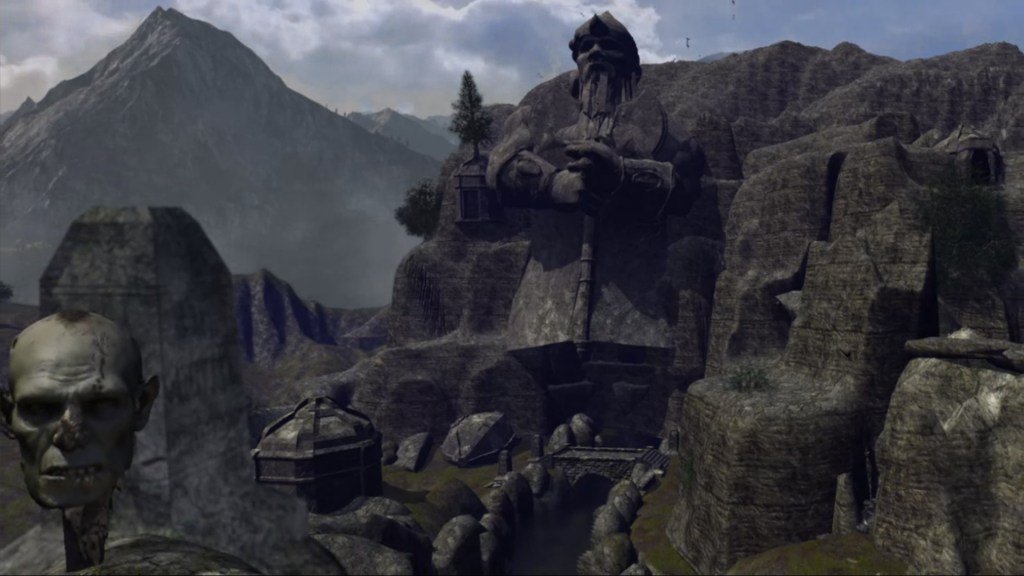
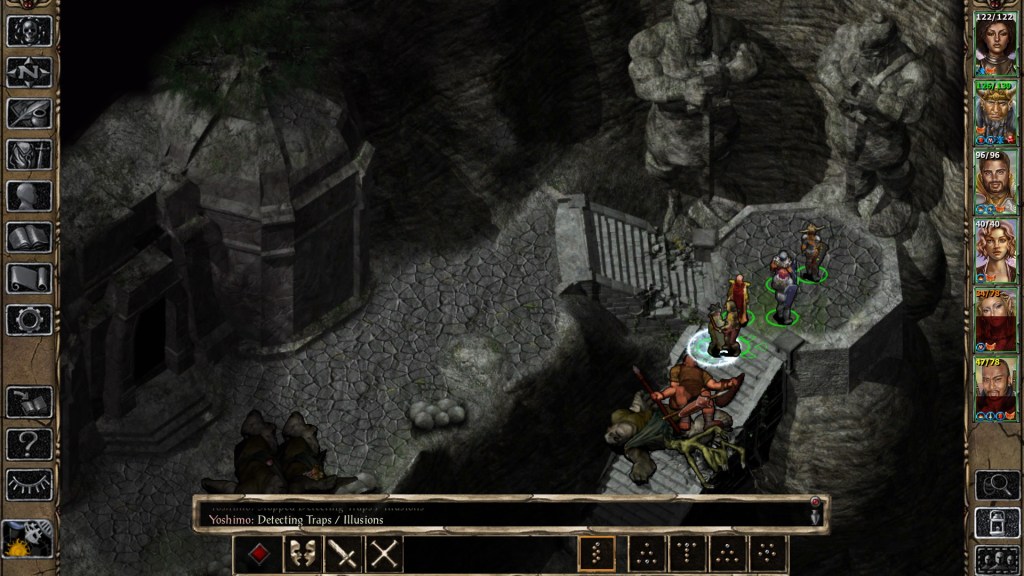
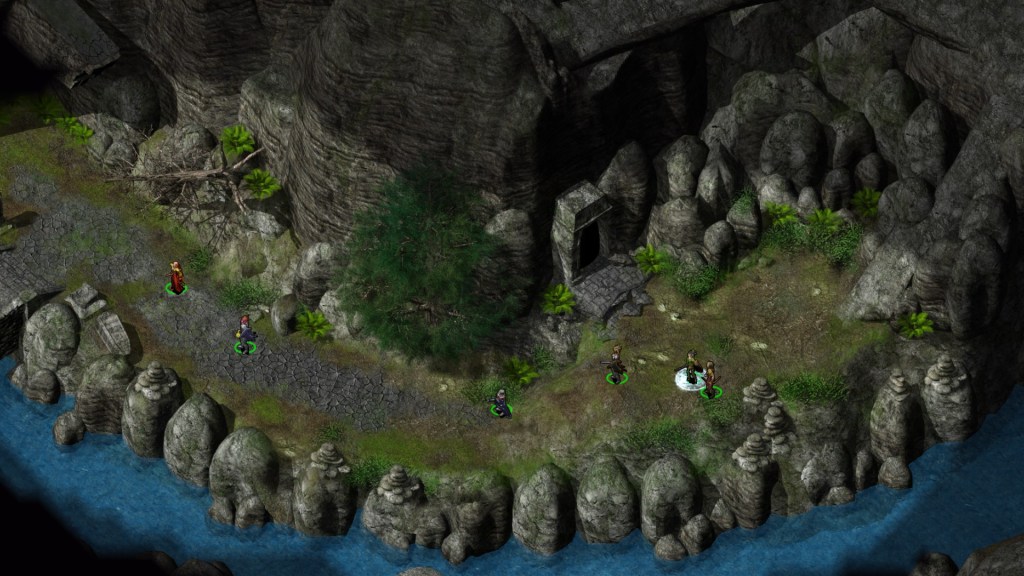
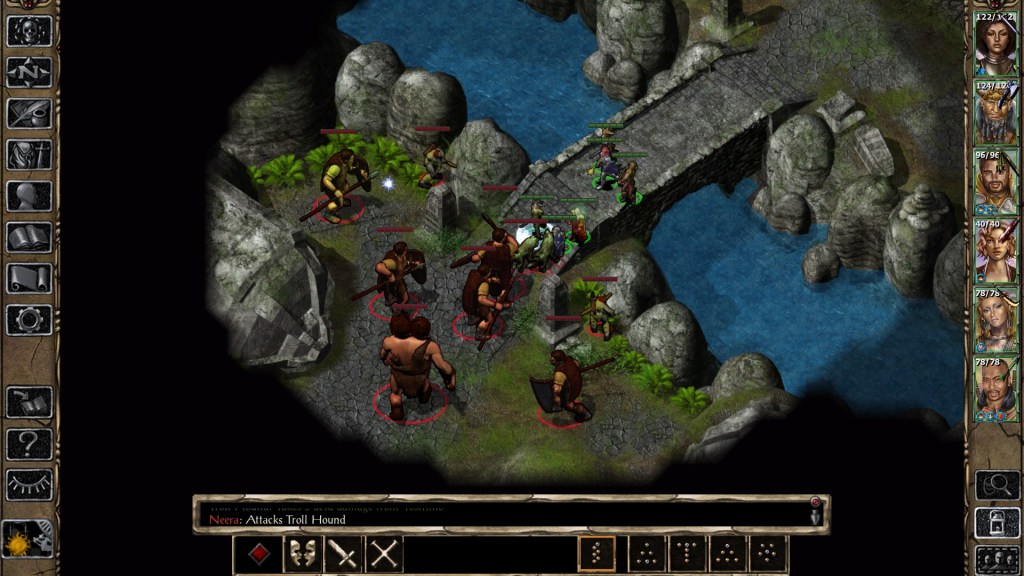
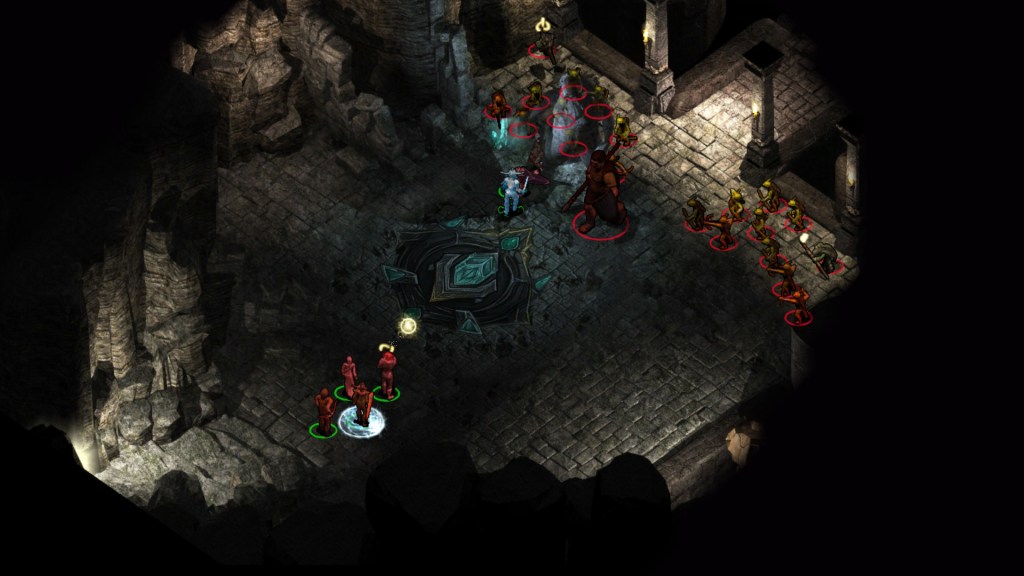
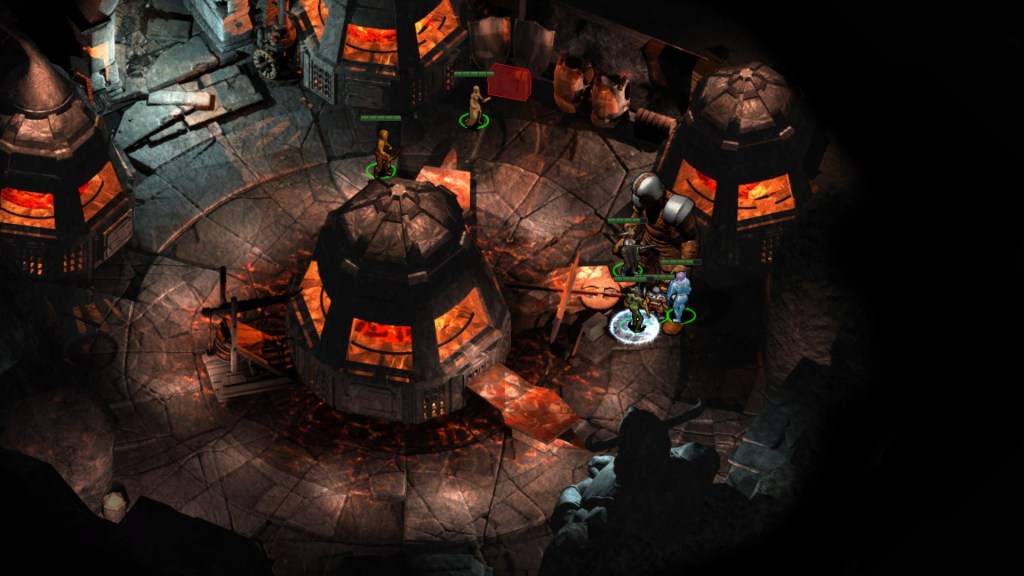
I have a particular love for rocky landscapes in the Infinity Engine, and this mod clearly takes inspiration from all across the engine’s catalogue for how it builds its environs — particularly Icewind Dale, from which it borrows part of its soundtrack for the outside portion of the Wailing Dwarf. I would have expected this to pull me out of the experience, but truth be told I didn’t even notice until about 10 minutes into exploring the area because it just fit in so well. Audiovisually, Throne of the Mad God is fantastic throughout,
The Wailing Dwarf is inhabited — or perhaps infested — by trolls, giants, and those that serve them. The adventure is recommended for parties of Level 9 and up, so I approached it with a very well equipped, balanced party on Core Rules difficulty. Personally, I still found it plenty hard, and the liberal usage of creative traps made it moreso.
Some folks that I’ve spoken to are rather concerned about how such a large mod like this might unbalance the experience earned in the game, how the items will make you too powerful. I’m rather sensitive to these ideas as well, so I was very pleased when I finished the entire questline sitting comfortably under Level 10 and with a slew of magical weapons implemented thoughtfully and creatively. There is, of course, a particular focus on dwarven equipment, which is excellent if you’re playing one yourself, you have Korgan along, or if you’re using one of the SMB-approved dwarf NPC mods. Everyone knows that you’re only allowed to play a mod if I reviewed it. Or if I made it.
There are many, many new enemy types in this mod. Mostly trolls that will make your life a living hell, but also the boulder-tossing Fomorians that constantly targeted my backline. I thoroughly enjoyed all of the new additions, and there are also some less-used enemies here too — ettins, verbeeg. There’s even a fission slime. I’m so happy that there’s a fission slime in this mod. I think that every enemy in the game should be replaced by fission slimes.
Delving into the Wailing Dwarf itself, the main passageway into the dwarven city of Korolnor is collapsed, and so you must take an alternate route that is very reminiscent of Durlag’s Tower, where you will learn the history of the city and the events that lead to its downfall and then proceed to answer questions regarding the history that you have learned. While the lore of Korolnor is not necessarily as tightly-bound or as haunting as that of Durlag’s Tower, it is nonetheless intriguing, and I found myself happily sitting and reading the numerous history books and long passages of dialogue on offer to me. If you’re not interested in doing this, then it’s not difficult to simply save-scum until you get the correct answers (I’ve done this in the ruined temple of Amaunator more than once), but I do recommend actively participating in the dungeon’s lore, because it ties everything together rather cohesively.
After wading through puzzles, traps, and many enemies, I found that Korolnor really does feel like it’s inhabited by the creatures that live there. They aren’t simply standing around waiting to fight — you find half-eaten animals, overhear casual conversations, and find evidence of Korolnor being an actual lived-in place by these monsters, atop a civilisation that has long since fallen into disrepair.

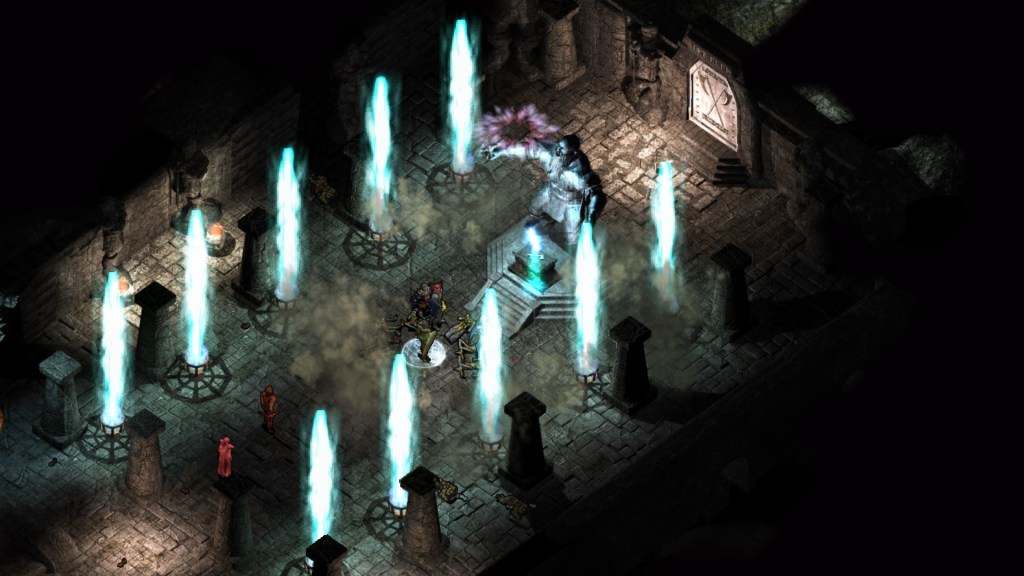

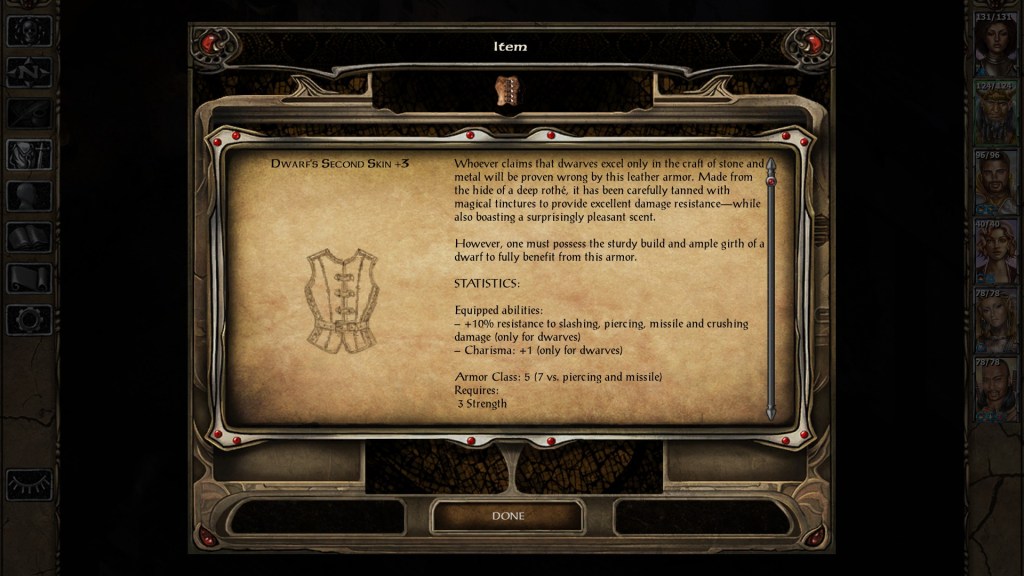
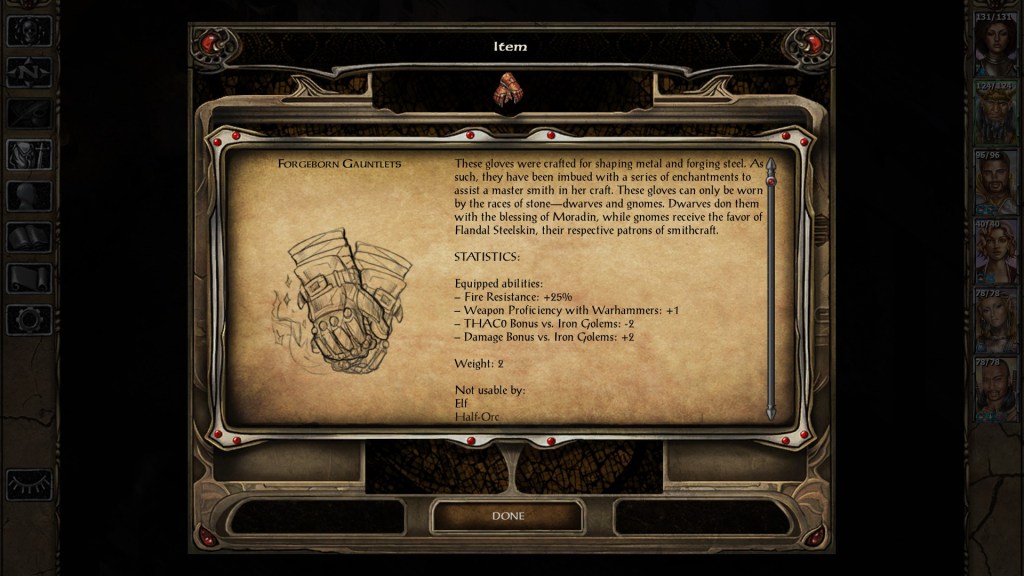
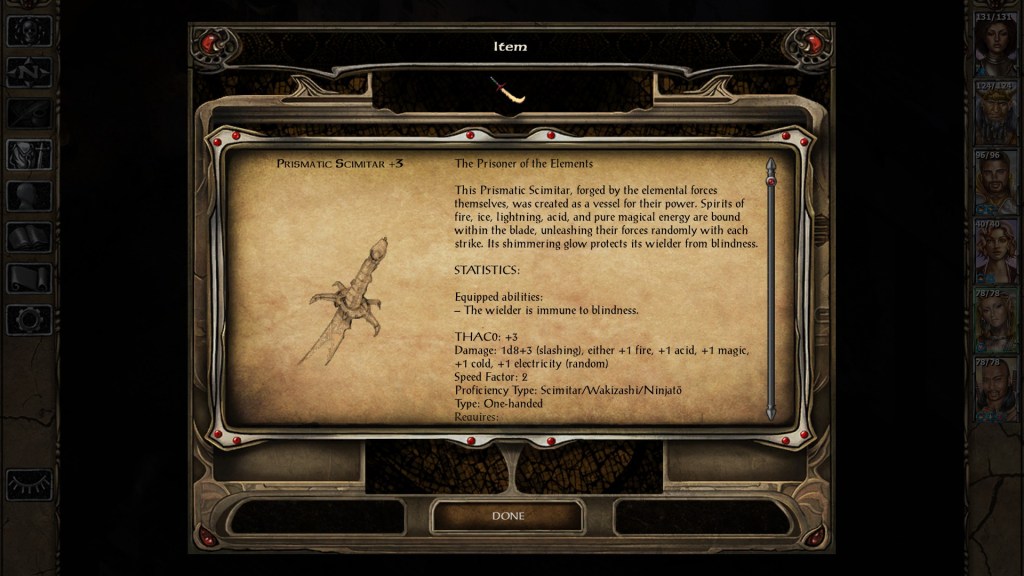
Further down, the dungeon becomes a well balanced mix of item-based puzzles, combat, and dialogue. It knows when to give you some time to rest and when to hook you in with a new plot element or area. It expands downwards farther than I expected, and it took me about seven hours to complete the entire quest. There are what I would consider a total of four boss fights throughout the dungeon, with each representing a different level of the unfolding story. They are all enjoyable, particularly the final tw0 — however, this is where I circle back to the beginning of the review.
Throne of the Mad God has two stories: that of the city of Korolnor, and that of the expedition of Bryam Lancameth. Progressing further into the dungeon sees these two tales begin to intertwine in interesting ways, until eventually they reach an emotional peak at the second final boss. While everything up to that point felt cohesive, the final battle after the emotional peak of the story has been reached ended up feeling a bit lacking to me. Like I said, though, the battle itself is well-designed and uses some unique mechanics to really set it apart, but I think the crux of the issue for me is that it just felt too grand. Lancameth’s story and the mystery surrounding it is the true emotional core of the dungeon, and to have an epic boss battle take place after it has resolved ended up feeling a bit surprising to me in a “Wait, we’re really doing this? Okay then!” kind of way — not wholly negative, but not necessarily my cup of tea. Much the same as the Demon Knight at the bottom of Durlag’s Tower, for instance.
That being said, it’s a staple of Forgotten Realms stories to have these kind of encounters seemingly come out of nowhere, so perhaps I can twist this singular negative critique I have of this mod into a positive in my mind — into yet another devotion to consistency with the world it’s in. Now that I know what it is I’m getting into when I decide to travel the Wailing Dwarf, I think I may enjoy it even more on my second go around.
Something small that I truly appreciated and might otherwise go overlooked, is that throughout the questline, there are very consistent, very helpful journal entries. It goes a long way into making it feel like a very cohesive experience and one in which you are constantly progressing. The quest also has a very definitive end point after you finish the final battle, which is an element that sometimes gets lost in development and leaves the player wondering if it’s okay for them to leave or if there’s something else they should do first.
Overall? Throne of the Mad God has shot up to the top of my recommendation list. For anyone who enjoys dungeon crawling, it’s a genuinely fantastic time — not just in the context of a mod, but in the context of RPGs in general. It shall henceforth remain in my installation list now and forever, and I fully encourage you to try it out if any single part of it intrigues you.
Thanks for reading.


 Smoldering Mods Bar
Leave a comment